Indoor Air Quality Upgrades That Actually Work at Home
A plain-English guide to indoor air quality upgrades that work: media filters, ERV/HRV ventilation, dehumidifiers, UV lights, and what to skip.
Articles on this site may include sponsored content. If they do, it's labeled clearly - and it still has to answer a real homeowner question. Same bar as everything else here.
Which Indoor Air Quality Upgrades Actually Help?
Your home’s air is probably worse than you think. The EPA has been saying it for years - indoor air can be two to five times more polluted than outdoor air - and most of us spend 90% of our time inside. That stale feeling in the living room, the dust that settles an hour after you clean, the congestion that comes and goes with the seasons - your HVAC system is part of the problem, and it can be part of the solution.
But here’s the thing: a lot of indoor air quality products are built to sell, not to work. Ionic “breeze” purifiers that barely move air. Essential oil diffusers that add VOCs instead of removing them. Portable units that clean a corner of one room while the rest of the house breathes whatever was in the attic. I’ve seen homeowners drop thousands on gear that made almost no measurable difference.
This guide is about the upgrades that actually move the needle. The ones your HVAC contractor recommends because they work, not because the margin is good.
The short version
Start with the basics before you buy anything expensive. Change your filter on schedule - use the HVAC filter change guide if you need a practical interval - because that is the single biggest lever you have. Seal your ductwork so the air you condition goes where it should. Then, if you still have issues with dust, humidity, or stale air, consider one of four proven upgrades: a media filter cabinet (better filtration without choking your system), an ERV or HRV (fresh air exchange without losing energy), a whole-home dehumidifier (humidity control for the entire house), or a UV light (biological growth prevention for the coil and drain pan). Skip the gadgets. Focus on the systems.
Start with the basics
Your filter is the most important upgrade you already own
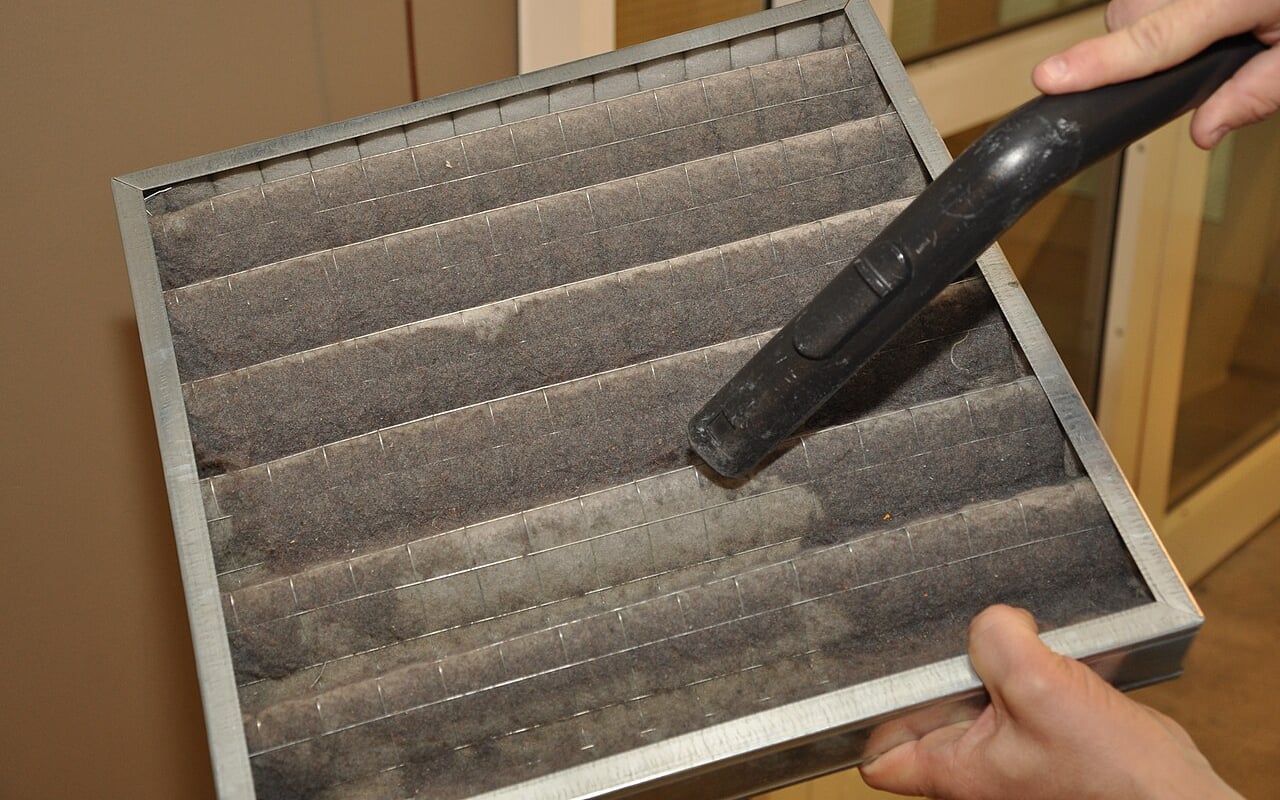
Before you spend a dime on fancy equipment, make sure you’re running the right filter and changing it on time. A MERV 8 filter catches the basics - dust, pollen, lint, dust mites. A MERV 11 filter catches those plus mold spores and pet dander. A MERV 13 filter adds bacteria, virus carriers, and smoke particles.
But here’s the catch: higher MERV ratings mean more airflow resistance. If your system wasn’t designed for a MERV 13 filter, slapping one in can reduce airflow enough to freeze your coil in summer or overheat your furnace in winter. More on that in the MERV ratings guide, but the takeaway is this - buy the highest MERV your system can handle without choking, and change it every 30 to 90 days.
Duct sealing - the forgotten upgrade
Leaky ductwork is the reason your upstairs is hot and your basement is cold. It’s also the reason your air quality is worse than it should be. Ducts that leak pull air from attics, crawlspaces, and basements - places where insulation dust, rodent droppings, mold spores, and fiberglass particles live. That air goes straight into your living space.
The duct leak testing and repair guide explains how pros confirm leakage, but the practical fix is straightforward: having your ducts professionally sealed (mastic, not foil tape) can reduce dust levels dramatically. Aeroseal is an advanced option that seals ducts from the inside - it’s more expensive but catches leaks you can’t reach by hand. Either way, duct sealing is often the most impactful air quality upgrade nobody talks about.
Humidity control matters more than you think
High indoor humidity (above 60%) creates the conditions for mold, dust mites, and bacteria to thrive. If the house already feels sticky with the AC running, compare your symptoms with the humid house troubleshooting guide. Low humidity (below 30%) dries out sinuses, irritates skin, and makes you more susceptible to respiratory infections. The sweet spot is 40% to 55%.
Your air conditioner naturally removes humidity when it runs. But on mild days - spring and fall in most climates - your AC doesn’t run enough to keep humidity in check. That’s where a whole-home dehumidifier comes in. It works with your HVAC system to remove moisture regardless of whether the AC is running, and it’s far more effective than portable dehumidifiers that collect a bucket of water in one room while the rest of the house stays damp. If you are deciding whether the issue is equipment, moisture load, or a standalone dehumidifier, use the dehumidifier vs better HVAC setup guide before you buy.
The upgrades that actually move the needle
Media filter cabinet - the filtration foundation
A standard 1-inch filter is a compromise. It’s thin, it loads up with dust quickly, and its high pressure drop means your blower has to work harder to push air through it. A media filter cabinet replaces that 1-inch slot with a 4- or 5-inch deep filter box. The deeper filter has more surface area, so it can catch more particles with less airflow resistance.
The practical result: you can run a MERV 11 or even MERV 13 filter without choking your system, and you only need to change the filter every 6 to 12 months instead of every month. A media filter cabinet typically costs $200 to $500 installed, and it’s one of the best values in indoor air quality.
ERV and HRV - fresh air without the energy penalty
Modern homes are built tight. That’s great for energy efficiency - you’re not leaking conditioned air through every crack - but it means stale indoor air stays inside. Cooking fumes, cleaning chemicals, off-gassing from furniture and carpets, carbon dioxide from breathing - it all accumulates.
An ERV (Energy Recovery Ventilator) or HRV (Heat Recovery Ventilator) solves this by bringing in fresh outdoor air while retaining most of your heating or cooling energy. In winter, the incoming cold air is pre-warmed by the outgoing warm air. In summer, the incoming hot air is pre-cooled. An ERV also transfers moisture, which makes it better for humid climates. An HRV only transfers heat, which makes it better for dry climates. If those terms are new, the fresh air ventilation basics guide walks through the difference in plain English.
Cost: $1,500 to $4,500 installed depending on the system and complexity of installation. That’s not cheap, but if anyone in the house has allergies, asthma, or you just notice the air feels “stale” after a few hours, an ERV or HRV will change how your home breathes.
Whole-home dehumidifier - not the same as a portable unit
Portable dehumidifiers are fine for a damp basement, but they’re the wrong tool for whole-house humidity control. They run independently of your HVAC system, they need manual emptying (or a drain hose that’s easy to trip over), and they add heat to the room they’re in - which makes your AC work harder.
A whole-home dehumidifier installs into your HVAC ductwork and works automatically. It pulls air from the return duct, removes moisture, and sends dry air back into the supply. It keeps the entire house at your target humidity regardless of whether the AC is running. Most can be controlled from your thermostat or a phone app.
Cost: $1,200 to $3,000 installed. If you live in a humid climate or have allergy sufferers in the house, this is the upgrade that pays for itself in comfort.
UV lights for the coil and drain pan - not a miracle, but real
UV-C lights mounted near your evaporator coil kill biological growth - mold, bacteria, and biofilm - on the coil surface and in the drain pan. This serves two purposes: it prevents musty smells that develop when the coil stays wet between cooling cycles, and it keeps the coil clean so your system runs efficiently.
What UV lights don’t do: they don’t clean the air passing through your ducts. The air moves too fast past the light for significant kill time. Anyone selling UV lights as “whole-home air purification” is overstating. Mounted correctly on the coil, they’re worth having. Mounted in the duct stream expecting to sterilize air? They’re not effective.
Cost: $300 to $800 installed. Worth it if you have persistent musty smells or you’re in a humid climate where the coil stays wet. It also belongs in the broader service conversation, so use what HVAC maintenance should include to separate real coil cleaning from add-on theater.
Carbon filtration for VOCs
Activated carbon filters absorb volatile organic compounds - the chemicals that off-gas from paint, new furniture, cleaning products, and building materials. Standard fiberglass or pleated filters don’t touch VOCs. If you’ve painted recently, moved into a new construction home, or you have chemical sensitivities, a carbon filter can make a noticeable difference.
The drawback is that carbon filters are thicker and more expensive than standard filters, and they need replacing more often because the carbon becomes saturated. A carbon-impregnated filter costs $15 to $30 and lasts about 90 days. A deep carbon filter bed (like in a media cabinet) costs more but lasts longer.
What doesn’t work
Ionic purifiers and ozone generators
Ionic air purifiers charge particles so they stick to surfaces - your walls, furniture, curtains, and lungs. They don’t remove particles from the air, they just move them out of the airstream. Some also produce ozone as a byproduct, which is a lung irritant. The California Air Resources Board recommends against them, and I do too.
Essential oil diffusers in HVAC systems
Essential oils don’t clean the air. They add fragrance, which is fine if you like the smell, but they also add volatile organic compounds. Some oils can also degrade rubber seals and gaskets in your HVAC system over time. Not worth it.
Single-room portable air purifiers for whole-house problems
Portable units are fine for a single room if you have a specific need - a baby’s nursery, for example. If the sales pitch is really about dusty ducts, read when duct cleaning is and is not worth it before you buy a purifier to solve the wrong problem. But trying to clean the air throughout a 2,000-square-foot house with portable units means buying multiple units, running them all the time, changing multiple filters, and still not catching air that moves through ducts you never filter at the source. A whole-home solution is more effective and usually cheaper in the long run.
How to decide what you actually need
Ask yourself these questions
- Do you see dust settling within a day of cleaning? Start with a better filter and duct sealing.
- Does the air feel stale after a few hours indoors? An ERV or HRV is your answer.
- Is your house consistently above 60% humidity? A whole-home dehumidifier.
- Do you smell musty odors when the AC runs? A UV light on the coil and a clean drain line.
- Did you just move into a new construction or remodel? Carbon filtration for VOCs.
- Do you have diagnosed allergies or asthma? Media filter cabinet with MERV 13, plus an ERV for fresh air dilution.
The order matters
Address the foundation before the upgrades. Filter first. Duct sealing second. Then add the specific solution for your specific problem. Buying a UV light because you read about it online won’t help if your real issue is that you’re running a dirty 1-inch filter and your ducts are pulling attic air into the living room. If you are hiring someone to sort through those options, bring the HVAC contractor questions checklist to the estimate.
Quick Answers
Q: What is the most effective indoor air quality upgrade?
For the money, upgrading to a media filter cabinet with a MERV 11 or 13 filter. It improves filtration across your entire home, reduces filter change frequency, and doesn’t require ongoing costs beyond replacement filters.
Q: Is a whole-home air purifier worth it?
Yes, if you choose the right technology. Media filters, ERV/HRV systems, and whole-home dehumidifiers all deliver measurable results for specific problems. Ionic purifiers and ozone generators are not worth your money.
Q: What’s the difference between ERV and HRV?
An ERV transfers both heat and moisture between incoming and outgoing air. An HRV transfers heat only. ERVs are better for humid climates; HRVs are better for dry climates. Both provide fresh outdoor air while retaining most of your heating or cooling energy.
Q: Do UV lights in HVAC actually work for air purification?
UV lights keep the evaporator coil and drain pan free of biological growth, which prevents musty smells and maintains efficiency. They do not meaningfully clean the air passing through the ductwork because the air moves too fast past the light.
Q: How much does a whole-home dehumidifier cost?
$1,200 to $3,000 installed. That’s more than a portable unit, but it works across the entire house, requires no maintenance beyond periodic cleaning, and integrates with your HVAC system and thermostat.
Q: Can I just use a higher MERV filter instead of buying upgraded equipment?
Yes - up to a point. Switch to a MERV 11 filter if you’re currently using MERV 8. If your system can handle the airflow, a MERV 11 is the best value filtration upgrade. MERV 13 requires a media filter cabinet on most residential systems to avoid restricting airflow.
Q: Do essential oil diffusers improve air quality?
No. They add fragrance, not filtration. Some essential oils can damage HVAC components over time. If you want cleaner air, filter it. If you want a different smell, burn a candle - but not in the same room as your thermostat.